

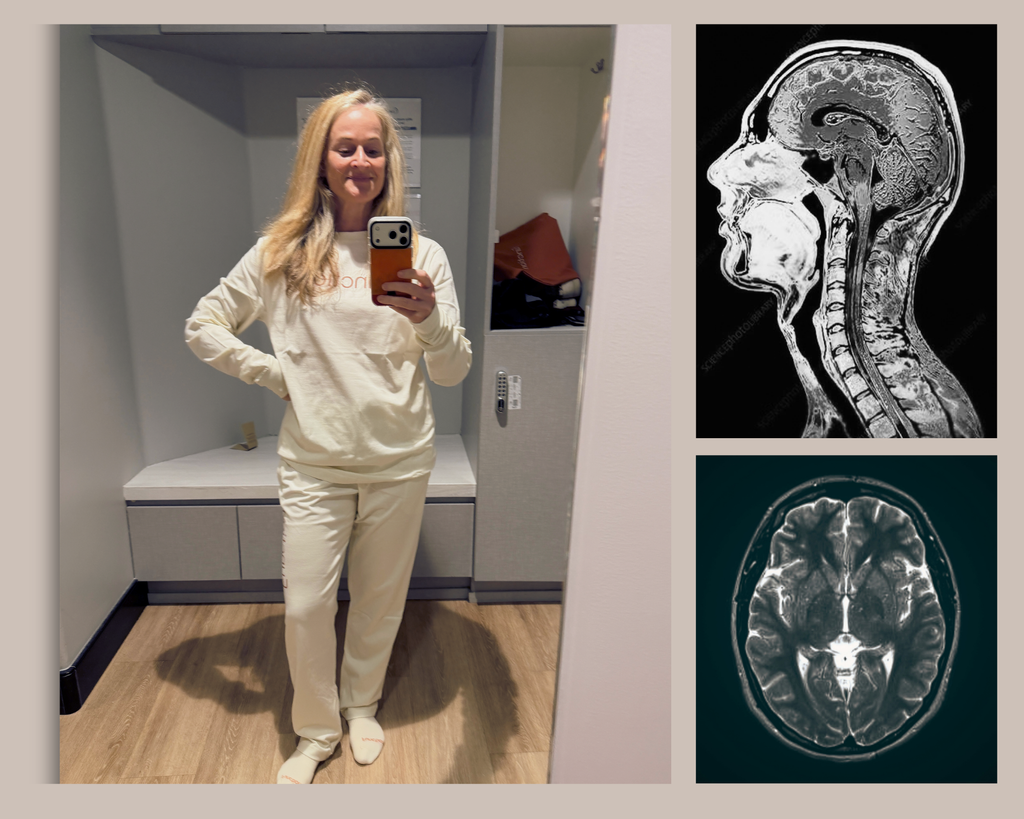
My career began in holistic health. Long before I became a keynote speaker or author, I was teaching people how to take charge of their health through movement, nutrition, stress management, and martial arts.
Prevention has always made more sense to me than waiting for a full-blown crisis.
That belief became much more personal after losing my dad. My dad was incredibly healthy and fit. At 78, he was still a martial artist. When he began experiencing pain, his symptoms were dismissed. Eventually, doctors discovered a massive tumor that had grown up his spine. By the time it was found, it was too late.
So when I was offered the opportunity to experience a complimentary Function Health MRI in partnership with Ezra, I said yes. Standing in front of that MRI machine, I couldn’t help thinking about my dad. I wondered how many stories might be different if preventive health screening and advanced screening were more accessible. I felt incredibly grateful for the opportunity, but also deeply aware of how privileged I was to have access to something like this. Because proactive healthcare shouldn’t be something we think about only after something goes wrong.
That’s also a principle that shows up constantly in my work:
Awareness before action.
Don’t wait for the crisis. Pay attention to the signals. Build the small, consistent habits now that can lead to massive transformation later. The same principle applies to our health.
So, as I approach my 50th birthday, I wanted to know more about what was happening inside my body.
What Is the Function Health + Ezra MRI?
My scan was offered through Function Health in partnership with Ezra. I went to an imaging center in Beverly Hills for a 30-minute MRI screening without contrast. My report included screening of my head and neck, abdomen, and pelvis.
While you’ll often hear people use the phrase full-body MRI, I think it’s important to be precise about what I actually received. This was a specific screening protocol, and the report only evaluated the organs and anatomy included in that protocol. The report also clearly states that the screening is intended for wellness purposes, isn’t diagnostic, and doesn’t replace established cancer screenings such as mammograms or colonoscopies.
In other words, this wasn’t a replacement for my regular healthcare. I saw it as another tool for learning more about my body.
What Was My 30-Minute MRI Like?
I spent about 30 minutes in the MRI machine.
If you’ve never had an MRI before, you lie still while the machine takes images of different areas of your body. For this particular screening, I didn’t receive contrast. It’s loud but bearable and I just do my best to go into a meditative state throughout.
And there was one unexpected perk:
They gave me sweats to wear for the scan and LET ME KEEP THEM.
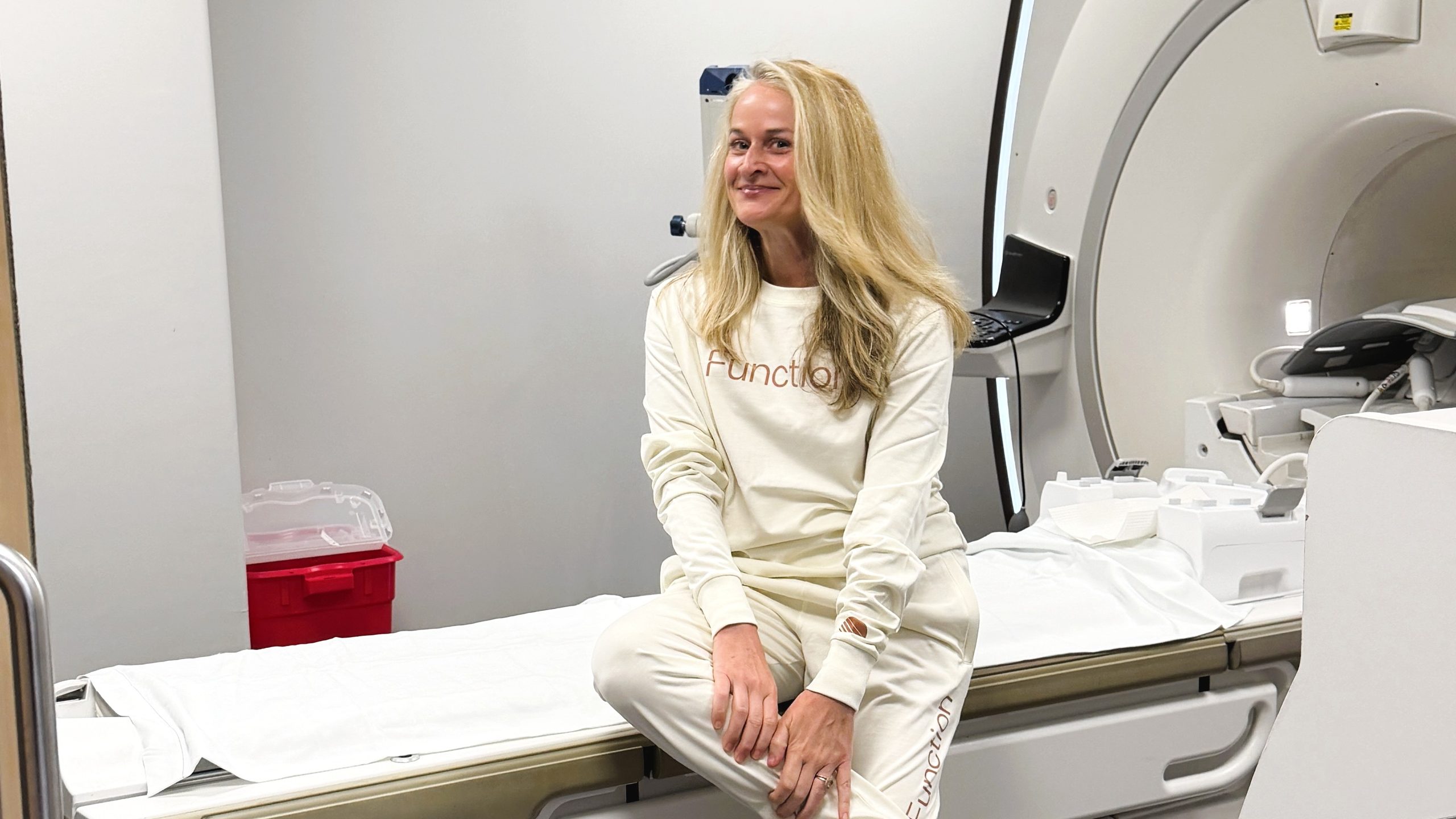
Which may or may not have been one of my favorite parts of the entire Ezra MRI experience. 🥰
What Did My Function Health MRI Find?
Of course, the experience of getting an MRI is one thing. Waiting for the results is another. Overall, my results were reassuring. My report described the screening MRIs of my head, abdomen and pelvis as unremarkable. There were also a few incidental findings that didn’t require imaging follow-up. But there was one finding that required me to take another step.
The MRI detected a small area on my right thyroid lobe. The recommendation was to discuss it with my healthcare provider and have a thyroid ultrasound and thyroid function tests for further evaluation. The report also explained that MRI isn’t the preferred imaging technique for characterizing this type of thyroid finding. Ultrasound is.
And this is where my experience with preventive health screening became particularly interesting. The MRI didn’t give me a diagnosis. It gave me information about where to look next.
Why Information is Empowerment
For me, having more information about my health is empowering. It doesn’t mean I’ll always get a definitive answer. Sometimes, information simply points me toward the next question. When my MRI revealed the thyroid finding, I could have immediately gone to Google, searched every possible explanation, and scared the living daylights out of myself.
Instead, I practiced something I teach all the time:
Respond to what’s actually happening, not to the story your mind immediately creates about it.
My report categorized the thyroid recommendation as non-urgent follow-up and suggested further evaluation. So that’s what I did.
Gather information. Breathe. Respond. Take the next appropriate step.
To me, that’s what being proactive about your health looks like. It’s not about trying to control every outcome. It’s about having greater awareness so you can make more informed decisions about what comes next.
Knowledge doesn’t have to create fear. It can create agency.
One More Note About MRI Screening
FAdvanced screening can provide information, but because the machines are so powerful it can also pick up things that are not of concern or uncover incidental findings that lead to additional tests, expense, worry, or medical procedures. And an MRI doesn’t replace the preventive screenings your healthcare providers recommend based on your age, medical history, family history and individual risk factors. My own report specifically reminded me to continue age-appropriate cancer screenings and work with my healthcare providers rather than treating this MRI as a replacement for conventional preventive care.
For me, the value wasn’t in believing one scan could tell me everything about my health. It was in having another empowering piece of information.
Want to Try a Function Health Scan for Yourself? Get $100 Off
If you’re curious about Function Health and want to explore it for yourself, my referral link will give you $100 off:
Get $100 off Function Health with my referral link
I’ll also be sharing my experience with Function Health bloodwork in a separate post, including what I learned from taking a much deeper look at my biomarkers.
Disclosure: I received my Function Health + Ezra MRI screening at no cost. If you use my referral link above, you’ll receive $100 off. This article reflects my personal experience and is for informational purposes only. It is not medical advice. MRI screening isn’t appropriate or necessary for everyone. Please talk with your healthcare provider about the preventive care and screening that’s appropriate for you.
About Jennifer Cassetta

Jennifer Cassetta is a high-performance coach, keynote speaker, martial arts expert, author, and podcast host who helps individuals and organizations build confidence, resilience, leadership skills, and sustainable performance.
Through her talks, writing, and online content, she shares practical tools that are designed to meet audiences where they are—whether they are navigating workplace challenges, personal growth, leadership development, conflict, or major life transitions.
Explore more of Jennifer’s insights through her website, blog, podcast, and video content.
Share & Follow
For inquiries:
Jennifer Cassetta
Website: jennifercassetta.com
YouTube: https://www.youtube.com/@jenncassetta