

As a resilience keynote speaker and high performance coach, I spend a lot of time thinking about what allows people to stay strong, adaptable, and energized when life and work keep making withdrawals. Resilience isn’t simply about how much pressure you can handle. It’s about how well-resourced you are to meet challenges, recover from setbacks, prevent burnout, and continue moving confidently toward your vision.
Are you surviving on coffee, fumes and vibes? Is your mindset focused on lack and limitation, or growth and expansion? Does every challenge send you into a spiral, or can you bounce back from life’s takedowns in a reasonable amount of time? And are you living with a big, bold, badass vision for your future? Or are you letting fear, uncertainty, or life itself determine what happens next?
These questions all point to something I’ve been thinking about, teaching, and developing for a while now:
Resilience isn’t just about how much you can handle. It’s about how resourced you are to meet life’s challenges and move forward confidently toward your vision.
And that distinction matters, especially for leaders and high performers who have become really good at pushing through.
What Does a Reservoir Have to Do With Resilience?
As I was writing about resilience for my upcoming book, Secrets of the Sensei, I kept flashing back to my childhood. I grew up about an hour north of New York City, near the reservoirs that supplied water to NYC. And for some reason, I was weirdly attuned to their levels.
When the water ran low, I remember feeling a quiet anxiety in my little body and mind. I worried about drought. There was also the worry about what would happen if there wasn’t enough. However, when the reservoirs were full, I felt full in a way, too.
Content. Safe. Enough. Plenty to spare. Ease in my body.
Decades later, as I was writing about resilience, that image came flooding back to me. What if our resilience works a little like a reservoir, too?
When we’re well-resourced, we have more capacity to handle life’s inevitable demands. But when our reserves are already depleted, even a small challenge can feel overwhelming.
What Running Low Can Look Like
I once had a client tell me they cried for two hours after hearing that someone else’s pet had passed away. I’m an animal lover myself, and hearing about a suffering kitty wrecks me, too. But I had a sneaky suspicion this wasn’t only about the animal.
In the conversation that followed, we discovered my client was in a state of overwhelm in both their professional and personal life.
Their reservoir was running low, and it needed to be replenished before they hit the Burnout Zone.
That’s the tricky thing about depletion. In fact, it doesn’t always look like collapsing on the couch and announcing, “I’m burned out.”
Sometimes it looks like:
- Losing your patience with a coworker or family member over something small
- Obsessing over one piece of negative feedback
- Feeling exhausted even though you’re technically getting enough sleep
- Struggling to focus or make decisions
- Losing motivation for work you normally enjoy
- Feeling like every minor request is just ONE. MORE. THING. TO. DO.
- Getting knocked down by a setback and having a harder time getting back up
- Accomplishing plenty but feeling strangely disconnected from all of it
- Realizing you don’t feel excited about your future anymore
For leaders and high-performing professionals, depletion can be particularly easy to miss because you’re often still performing.
You’re meeting the deadline. Leading the meeting. Answering the emails. Taking care of everyone else. From the outside, you may look completely fine. Inside, your reserves may be getting lower and lower.
For that reason, burnout prevention needs to be addressed before someone completely runs out of gas.
A difficult conversation can free up emotional energy. Getting clear on a vision can reignite motivation. A few minutes regulating your nervous system can change how you respond to the next challenge.
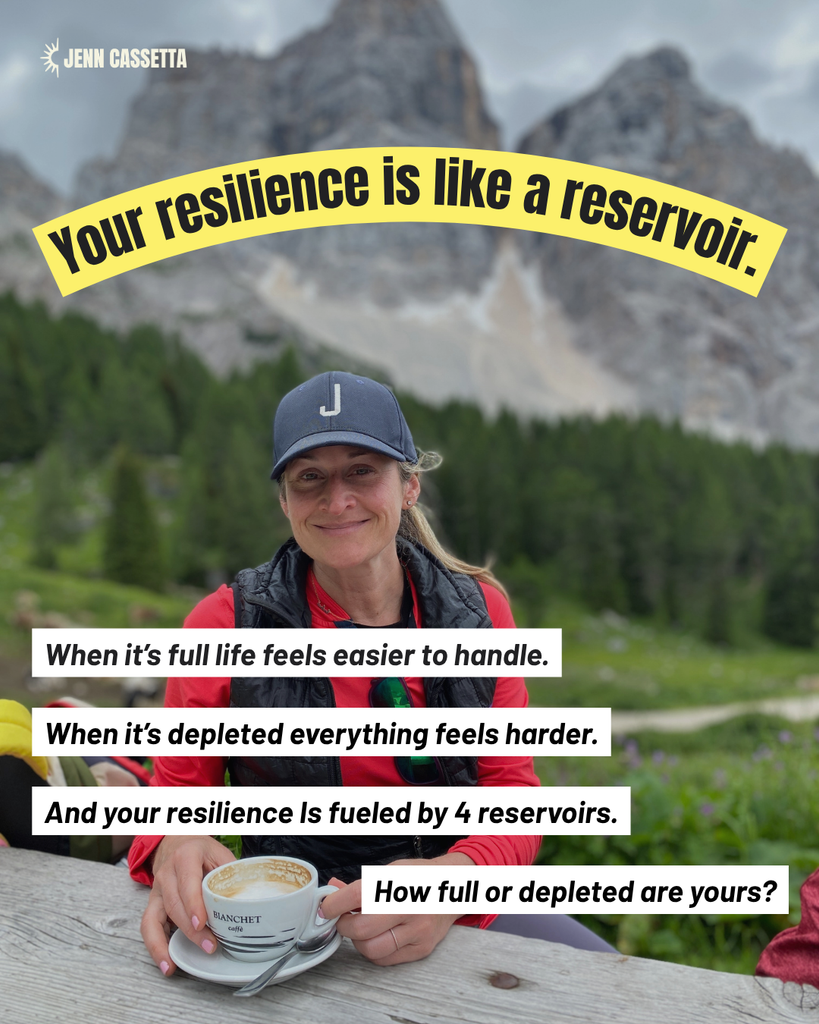
Resilience isn’t fixed. It’s something we can practice, protect and replenish.
TAKE THE FREE RESILIENCE RESERVOIR ASSESSMENT
The Four Reservoirs of Resilience
I believe our overall resilience is fueled by four interconnected reservoirs: Physical, Mental, Emotional, and Vision & Flow. Together, they influence how we handle pressure, recover from setbacks, navigate change, and sustain high performance without burning ourselves out.
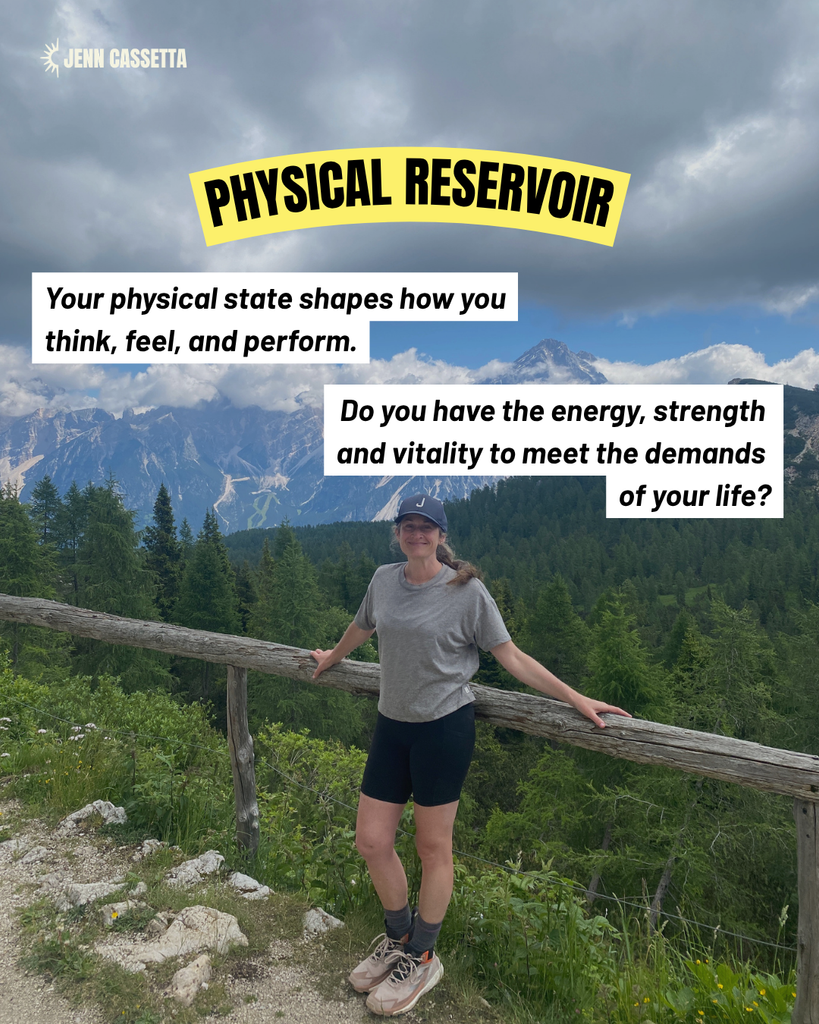
1. Physical: Energy, Strength & Stamina
Your physical state shapes how you think, feel, and perform. Do you have the energy, strength, and stamina to meet the demands of your life? Or are you surviving on coffee and fumes?
Sleep, movement, nutrition, recovery, and energy management all contribute to this reservoir.
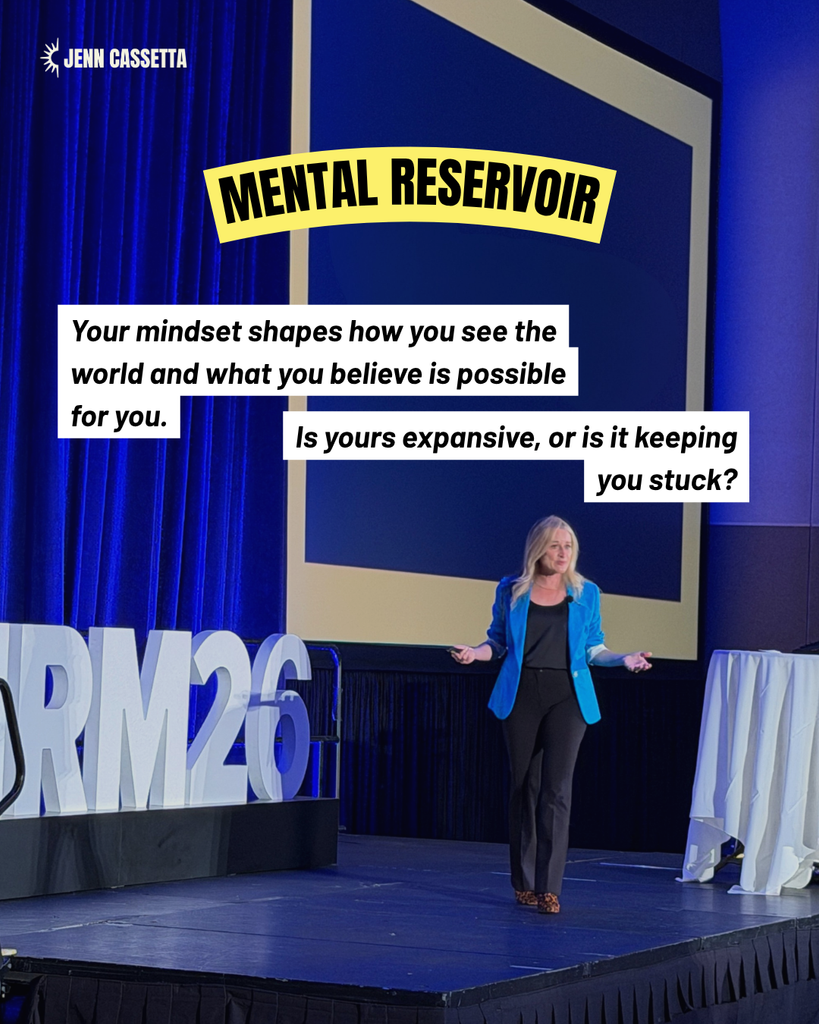
2. Mental: Mindset & Perspective
Your mindset shapes how you see the world and what you believe is possible.
Are you focused on lack and limitation, or growth and expansion?
Mental resilience doesn’t mean pretending everything is great. It means being able to shift your perspective, challenge unhelpful thought patterns, and find possibility even during uncertainty and change.
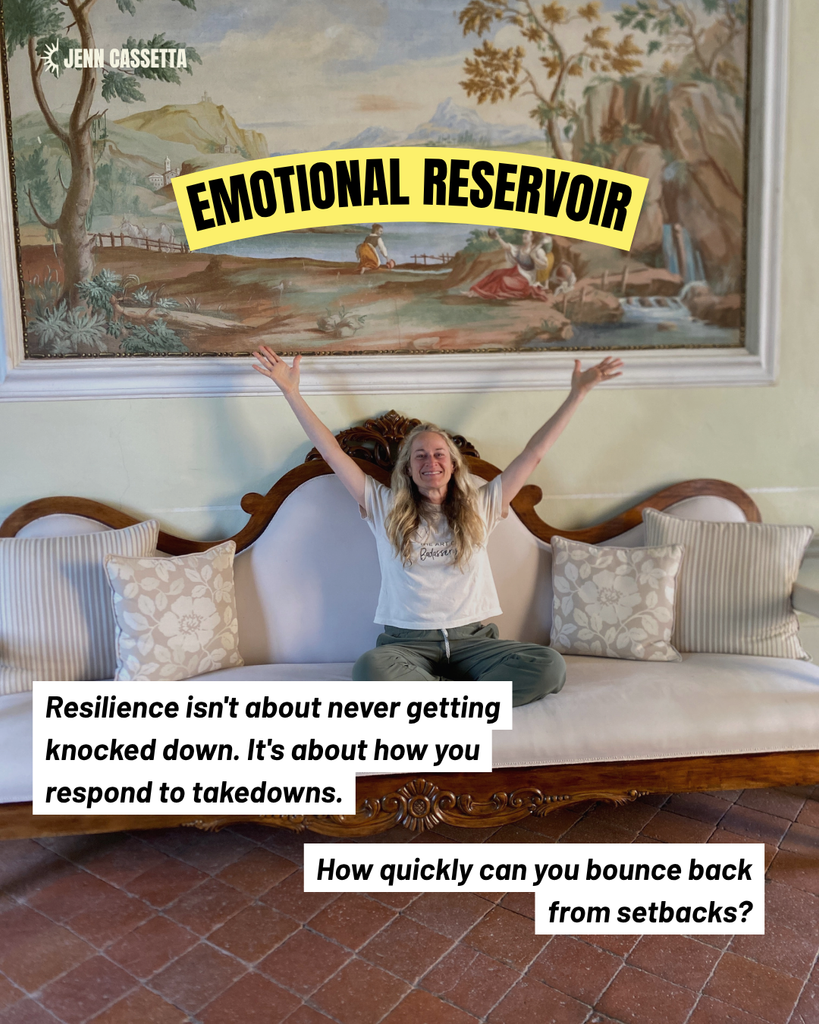
3. Emotional: Regulation & Recovery
Life is going to deliver takedowns. That’s part of being human. Does every challenge send you into a spiral, or can you bounce back in a reasonable amount of time?
Emotional resilience isn’t about becoming emotionless. It’s about feeling what you need to feel without letting those emotions run the entire show.
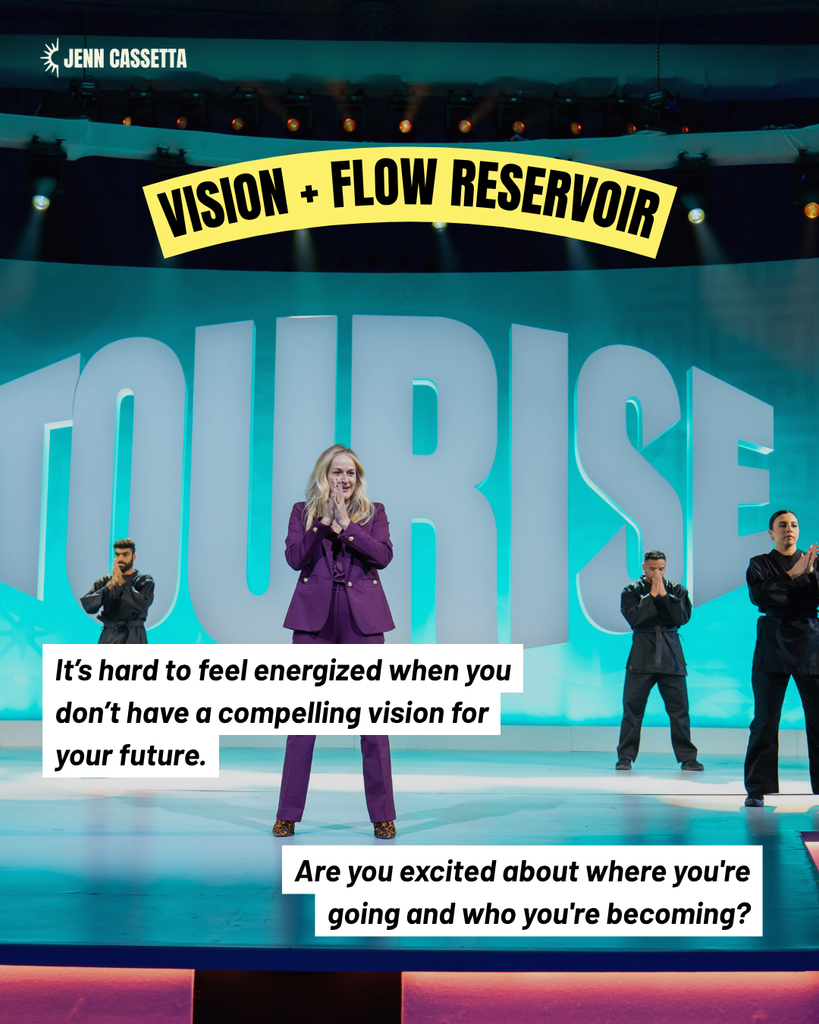
4. Vision & Flow: Purpose & Direction
It’s hard to feel energized when you don’t have a compelling vision for your future. Are you living with a big, bold, badass vision for yourself and your life? Or are fear and outside circumstances determining your next steps?
You can be incredibly productive and still feel disconnected. A compelling vision gives your energy somewhere to flow.
Your Reservoirs Are Connected
You can feel strong and resourceful in one area while another reservoir is quietly running low. And when one stays depleted for too long, it can start affecting the others. Poor sleep can affect your focus. Stress can make you more emotionally reactive. A lack of direction can drain your motivation. The opposite is also true.
Resilience isn’t something you either have or don’t have. It’s a capacity you can strengthen over time. You can make small deposits, build your reserves, and replenish your energy. That’s what sustainable high performance is truly about—building the capacity to keep showing up, performing well, and thriving without burning out.
How Full Is Your Resilience Reservoir?
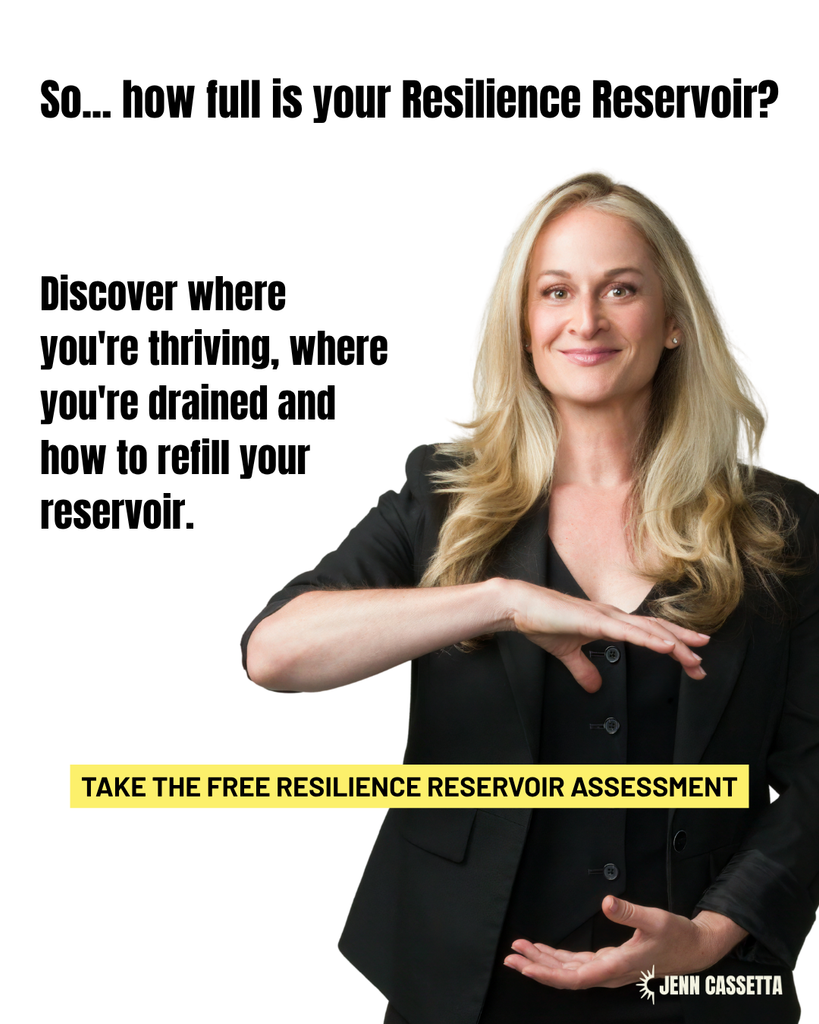
I created the Resilience Reservoir Assessment to help you find out.
In just a few minutes, you’ll get a snapshot of your Physical, Mental, Emotional, and Vision & Flow reservoirs so you can see where you’re thriving and where you may be running low.
And I didn’t want to give you a score and leave you wondering, Now what?
You’ll also receive a personalized Sensei Prescription with practical tools and practices to help you start replenishing the areas that need it most.
TAKE THE FREE RESILIENCE RESERVOIR ASSESSMENT
Bring the Resilience Reservoir to Your Organization
If you’re a meeting planner, event planner, HR leader, or learning and development professional looking for a resilience keynote speaker or high performance keynote speaker, the Resilience Reservoir Assessment can also be incorporated into my keynotes and workshops.
It gives attendees a personalized way to apply what they’re learning to their own lives and continue building workplace resilience, energy management, burnout prevention, and sustainable high performance long after the event ends.
EXPLORE JENNIFER’S KEYNOTES & WORKSHOPS
Because resilience isn’t about never getting knocked down.
It’s about having the resources to get back up and keep moving forward.
About Jennifer Cassetta

Jennifer Cassetta is a high-performance coach, keynote speaker, martial arts expert, author, and podcast host who helps individuals and organizations build confidence, resilience, leadership skills, and sustainable performance.
Through her talks, writing, and online content, she shares practical tools that are designed to meet audiences where they are—whether they are navigating workplace challenges, personal growth, leadership development, conflict, or major life transitions.
Explore more of Jennifer’s insights through her website, blog, podcast, and video content.
Share & Follow
For inquiries:
Jennifer Cassetta
Website: jennifercassetta.com
YouTube: https://www.youtube.com/@jenncassetta